Where Your Supplies Go: The Journey From an Orlando Drawer to a Miami Door
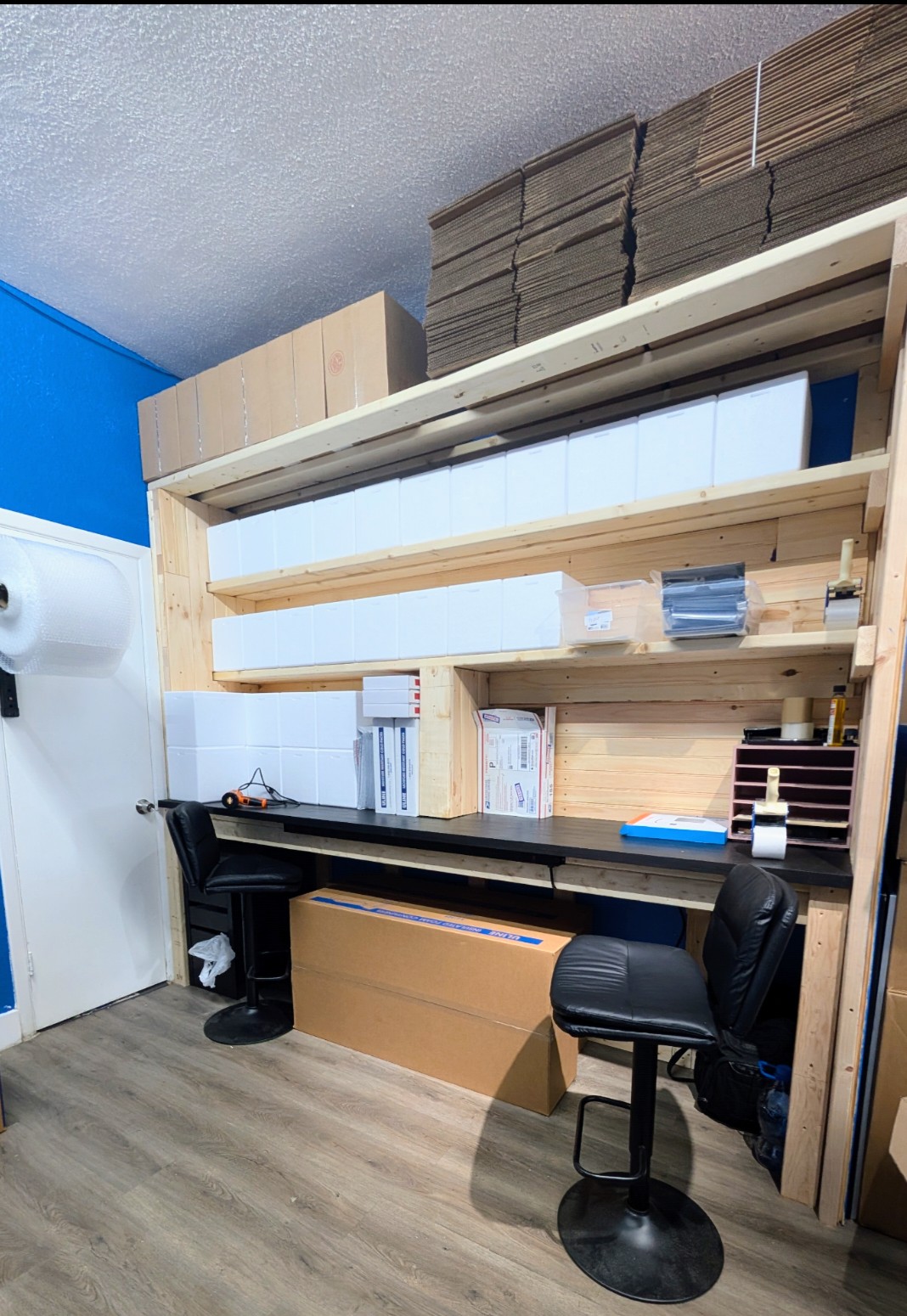
Every box we buy has a story on both ends. People ask us all the time — sometimes curious, sometimes skeptical — what actually happens to their supplies after the payment hits their account. It is a fair question, and the answer is the entire reason this company exists. So let us follow one box, start to finish. The details are a composite of what we see in our daily operations, but the journey is real, and versions of it happen every single week.
The Drawer in Orlando
Start in a kitchen drawer in Orlando. A woman we will call Maria has managed Type 2 diabetes for nine years. Last spring, her doctor moved her onto a CGM — life-changing, she would tell you — but her insurance auto-refill did not get the memo. The 90-day test strip shipments kept coming on schedule, the way they do for millions of people, because auto-refill programs ship on fixed cycles regardless of what anyone actually uses.
By June, Maria has six sealed boxes of premium strips she will never open. She tries the obvious thing first: taking them back to the pharmacy. The pharmacist is kind but firm — pharmacies legally cannot accept returns on dispensed products, even factory-sealed ones. There is no return channel. Nationally, this exact dead-end strands an estimated five billion dollars in sealed, unexpired diabetic supplies every year.
Maria's boxes have two possible futures: the trash in eleven months when they expire, or something better.
The Quote, the Label, the Mailbox
Maria finds the something better. Ten minutes online: brand, quantity, expiration dates, quote. A prepaid label lands in her email. She packs the six boxes the smart way — sturdy box, bubble wrap, packing slip inside — and drops the package at her neighborhood post office on a Tuesday morning, because she read somewhere that shipping early in the week gets you paid faster. (She read right.)
Her part is done. Total effort: about half an hour. She never left Orlando.
The Table in Tampa Bay
Two days later, the box arrives at our facility here in the Tampa Bay area. The packing slip matches it to Maria's quote in seconds. Then the five checks, in order, same as every box: no government program markings — clean. Factory seals — intact, all six. Condition — mint; the bubble wrap did its job. Expiration dates — eleven-plus months on every box. Quote match — exact.
Inspection complete inside the 24-to-48-hour window. Pharmacy labels removed and shredded. Payment released — Zelle, in Maria's case, which clears in minutes. By Friday of the same week, Maria has been paid in full, and six verified boxes sit cataloged on our shelves: sealed, dated, inspected, and stored in climate control — which matters, in a state where a garage can cook a box by August.
The Door in Miami
Now the other end of the story. In Miami, a man we will call Robert tests four times a day. He drives for a living, no employer coverage, and the marketplace plan he could afford has a deductible he will never realistically clear. At his pharmacy, the strips he needs run over two hundred dollars a box at retail. Robert has done what roughly 38 million Americans managing diabetes on tight budgets quietly do — he has rationed, stretching strips by testing less than his doctor wants.
Robert finds the same product, factory-sealed, verified, at a fraction of the pharmacy price. He orders. The box ships from Tampa Bay and lands at his door in Miami two days later — one of Maria's six, as it happens, though neither of them will ever know it.
Robert tests four times a day now, the way he is supposed to. That is the whole story. That is the entire company, in one box's journey down I-4 and down I-95.
Why This Cycle Beats Every Alternative
Look at what the journey replaced. Without it, Maria's boxes expire in a drawer and go to a landfill — six boxes among five billion dollars' worth. Robert keeps rationing. The waste and the need never meet, even though they live three hours apart on the Florida Turnpike.
The verified secondary market is the only channel that connects them — legally, safely, with inspection in the middle. The pharmacy cannot do it; returns are prohibited. The informal market should not do it; nobody inspects a parking-lot deal. A verified buyback company is not a workaround in this system. It is the missing piece of it.
And it scales beyond one story: from Orlando and Tampa and Miami to all of Florida, and from Florida to sellers and buyers in all 48 continental states — every box making some version of the same trip.
Your Drawer, Someone's Door
If you are the Maria in this story — auto-refill surplus, a treatment change, an estate, a switch to a CGM — your sealed boxes are eleven months from a landfill or one week from mattering to someone. And if you are the Robert, the supplies you have been rationing over cost are sitting verified on a shelf right now for less than the pharmacy wants.
Both ends of this story are standing in Florida kitchens today. We are just the road between them.
Have a drawer like Maria's? Get a free quote at expressdiabetics.com/sell.
Testing less than you should over cost, like Robert? Shop verified supplies at expressdiabetics.com.
Sources: 2026 industry analysis of the ~$5 billion annual unused diabetic supply surplus (auto-refill cycles, GLP-1 transitions, pharmacy no-return rules) | CDC/ADA population data (~38 million Americans managing diabetes) | Express Diabetics intake, inspection, and fulfillment operations | Seller and buyer details presented as an illustrative composite | Reviewed and updated August 6, 2026
Frequently asked
- Where do diabetic supplies go after I sell them?
- Sealed, verified supplies are inspected, cataloged, and resold at below-retail prices to people who need them — often uninsured or underinsured buyers who cannot afford pharmacy pricing. Your unused box becomes someone else's affordable monitoring.
- Why can't unused supplies just be returned to the pharmacy?
- Pharmacies legally cannot accept returns on dispensed products, even sealed ones. That rule creates a dead-end for billions of dollars in sealed, unexpired supplies every year — and it is exactly the gap the verified buyback market exists to close.
- How big is the unused diabetic supply problem?
- The U.S. generates billions of dollars in unused, sealed diabetic supplies annually — an estimated five-billion-dollar waste problem — driven by 90-day insurance auto-refill cycles, treatment changes, and the shift of many patients to GLP-1 therapies.
- Who buys resold diabetic supplies?
- Primarily people managing diabetes on tight budgets — the uninsured, the underinsured, and those in coverage gaps. Roughly 38 million Americans manage diabetes, and for many of them, verified below-retail supplies are what makes consistent monitoring affordable.
How Was This Written?
- Written By
- Jacob W. Metheney
- Editorial Standard
- Content is verified against real-time U.S. market pricing, strict manufacturing brand criteria, and transparent certified compliance guidelines.
- Date Last Reviewed
- June 2026