The Uninsured Diabetic's Playbook: How to Afford Supplies in 2026
If you are managing diabetes without insurance, you already know the math is hostile. People with diabetes spend roughly $9,600 a year on care — more than double what someone without diabetes spends — and when there is no plan absorbing any of it, every sensor, strip, and vial comes straight out of your pocket. This playbook is the complete 2026 map: five paths, what each actually delivers, and how to stack them. Work down the list in order.
Path 1: Find Your Community Health Center First
This is the most underused resource in American diabetes care. Federally qualified health centers (FQHCs) participate in the federal 340B drug pricing program, which lets them buy medications at deeply discounted prices — and they are required to serve patients regardless of ability to pay, using sliding-fee scales based on your income and family size.
What that means practically: your bill is based on what you can actually afford, not the sticker price. As of 2026, federal requirements also ensure life-saving supplies like insulin are provided to low-income patients at or below 340B acquisition cost. Many centers run on-site or contract pharmacies, so diagnosis, prescriptions, monitoring, and dispensing happen in one place.
Bring a photo ID, proof of household income, and proof of residency to your first appointment. Search "federally qualified health center near me" — this single step reshapes the affordability picture for more people than any other item on this list.
Path 2: Patient Assistance Programs (Free, If You Qualify)
Manufacturers run patient assistance programs (PAPs) that provide products at no cost to qualifying uninsured patients — typically those earning up to 400% of the federal poverty level. All three major insulin makers run them, and they often bundle supplies like pens and meters. Device manufacturers run their own versions; Dexcom's, as we covered in Episode 1 of our savings series, can bring costs down to $45 per 90-day supply for those who qualify.
The catch is real: applications require you and your doctor to complete paperwork, approval takes time, and enrollment windows open and close. Apply anyway — free is free, and the worst outcome is a "no" that costs you an afternoon.
Path 3: Discount Cards and Cost-Plus Pharmacies
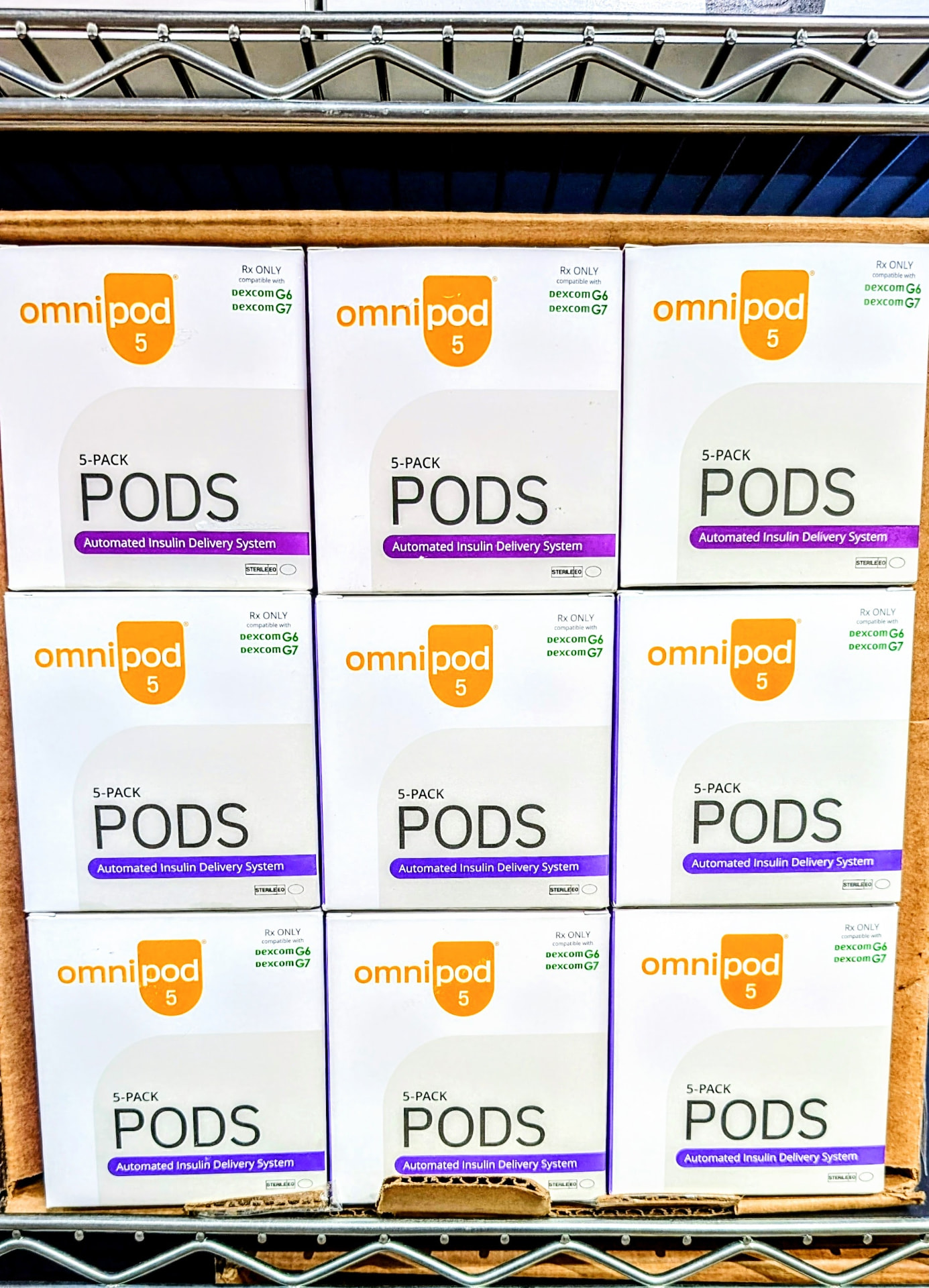
For anything you are buying at a pharmacy counter, never pay the posted price. GoodRx, SingleCare, and WellRx coupons require no enrollment and cut retail prices substantially — we documented Libre sensors dropping to roughly $140-$152 and Omnipod boxes to around $332 through these cards. Mark Cuban Cost Plus Drugs prices some products at near-wholesale plus a small markup. Walmart's ReliOn line offers budget insulin options.
These require a prescription, and prices swing by pharmacy and ZIP code — so price two or three nearby pharmacies before filling.
Path 4: Free Meters, Cheap Strips
Do not spend money on a glucose meter. Major manufacturers — OneTouch, Accu-Chek, FreeStyle — regularly run offers that mail a free meter to new users. As we explained in our meters guide, the meter is the printer and the strips are the ink: manufacturers give away meters because the strips are the recurring revenue.
So pick your meter strategically. Choose the one whose strips you can reliably source cheapest over a year, not the one with the flashiest feature list. A free meter paired with expensive strips is a trap; a free meter paired with affordable strips is a system.
Path 5: Verified Resale for the Expensive Categories
Here is where the hardest category gets solved. CGM sensors and pump supplies are where uninsured budgets break — and they are also where the manufacturer programs help least, because those savings cards frequently exclude government-plan members and require prescriptions, and Insulet's copay card excludes self-pay patients outright.
Verified resale has none of those gates. At Express Diabetics, sealed, unexpired, brand-name supplies — Dexcom G7 and FreeStyle Libre sensors, Omnipod pods, test strips, meters, lancets — are inspected for factory seal integrity and expiration, then sold below pharmacy retail with no prescription requirement, no income application, and no eligibility list. For an uninsured buyer, this is often the difference between monitoring consistently and rationing.
If you are not on insulin, one more option belongs here: over-the-counter CGMs like Stelo and Lingo can be purchased by any adult with no prescription at all.
How to Stack These (the Actual Strategy)
Most people do not pick one path — they combine them. A realistic stack looks like this: get established at an FQHC for care and prescriptions at sliding-scale pricing. Apply to every PAP you might qualify for. Claim a free meter. Price your strips and any prescription items with discount cards. And source your expensive sensors and pods through verified resale, where there are no eligibility gates.
One thing we will say as plainly as we know how: never ration insulin. Skipping doses to save money can cause diabetic ketoacidosis within hours and is life-threatening. If you are out today and have no money, call your doctor's office about samples, contact manufacturer emergency assistance lines, or find a local free or charitable clinic. Cost is a problem to solve — never a reason to skip a dose.
The Bottom Line
Uninsured does not mean unsupported. Community health centers price by what you can afford. Patient assistance programs give products away free to those who qualify. Discount cards cut counter prices. Meters are free if you ask. And the expensive categories — sensors and pods — have a no-gatekeeper path through verified, inspected resale. Work the list, stack what fits, and stop paying sticker for any of it.
Need affordable diabetic supplies for less? expressdiabetics.com. Have sealed extras? expressdiabetics.com/sell.
Sources: HHS ASPE 2026 insulin affordability landscape (FQHC and 340B mechanics, sliding-fee requirements) | NACHC 340B diabetes data (~$9,600 annual diabetes care spending) | 2026 340B federal requirements on low-income insulin pricing | SIRUM 2026 free diabetic supplies guide (PAP eligibility to 400% FPL, free meter offers) | Manufacturer program terms documented in this series (Eps. 1-3) | Reviewed and updated August 12, 2026
Frequently asked
- How can I get diabetic supplies without insurance?
- There are five main paths: federally qualified health centers with sliding-fee pricing, manufacturer patient assistance programs, pharmacy discount cards, free meter offers from manufacturers, and verified resale of sealed supplies below retail. Most uninsured patients end up combining several of them.
- What is a 340B community health center and how does it help?
- Federally qualified health centers participate in the federal 340B drug pricing program, letting them dispense medications at deeply discounted prices. They must serve patients regardless of ability to pay and use sliding-fee scales based on income and family size — making them one of the strongest resources for uninsured diabetes patients.
- Can I get a free glucose meter without insurance?
- Often yes. Major manufacturers including OneTouch, Accu-Chek, and FreeStyle regularly run offers that mail a free meter to new users. The recurring cost is in the test strips, not the meter — so pair a free meter with the cheapest strips you can reliably source.
- How do uninsured patients afford CGM sensors?
- CGM sensors are the hardest category because manufacturer savings cards often exclude government-plan members and require prescriptions. Uninsured patients typically use pharmacy discount cards, over-the-counter CGMs like Stelo or Lingo if not on insulin, or verified resale of sealed, inspected sensors below pharmacy retail.
How Was This Written?
- Written By
- Jacob W. Metheney
- Editorial Standard
- Content is verified against real-time U.S. market pricing, strict manufacturing brand criteria, and transparent certified compliance guidelines.
- Date Last Reviewed
- June 2026