Dexcom G7: How to Buy It Cheaper and Sell Extras for Cash in 2026
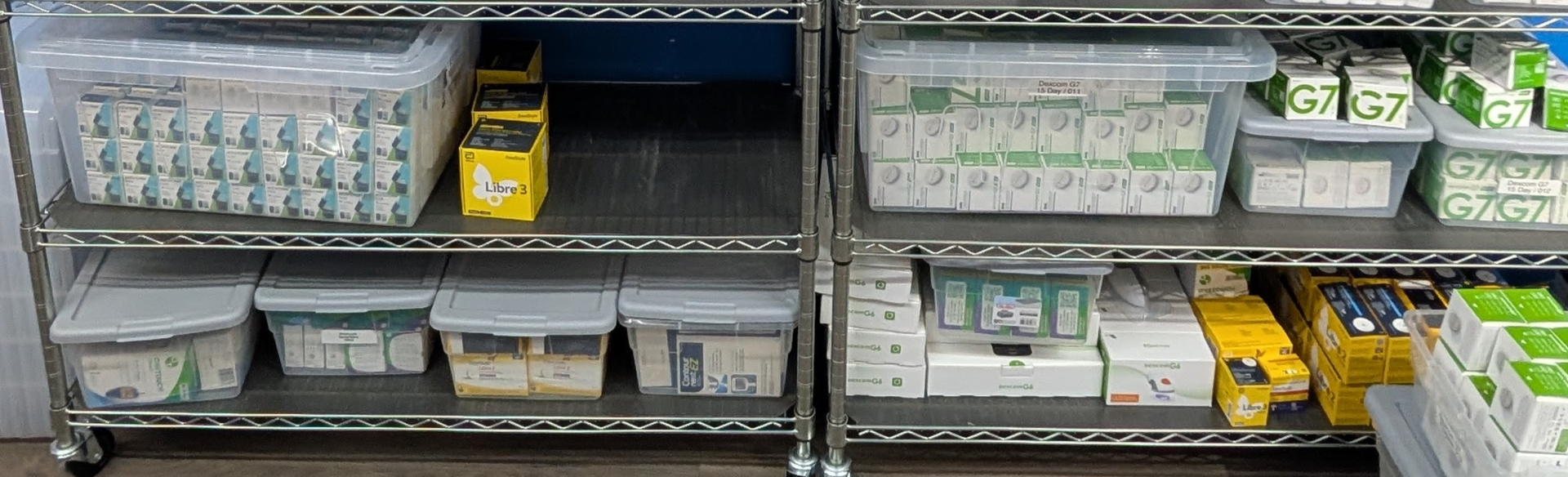
The Dexcom G7 is one of the most popular continuous glucose monitors in the world — and one of the most expensive diabetic supplies you can buy. Without insurance, it costs around $579 a month. That price makes it the single most important product to understand on both sides of the secondary market: it is where buyers save the most, and where sellers earn the most. Here is your complete 2026 guide to the Dexcom G7.
What the Dexcom G7 Actually Costs
Let us start with the numbers, because they are striking. Without insurance, a one-month supply of three Dexcom G7 sensors averages about $579 — roughly $190 per sensor. Over a year, that adds up to $6,900 or more just for sensors. If you add the optional receiver, that is another $430 or so, though many users skip it and use the Dexcom G7 app on their smartphone instead.
For someone with good insurance, copays might bring that down to $0 to $75 a month. But for the uninsured, the underinsured, or anyone in a coverage gap, that full $579 lands every single month. This is exactly why the Dexcom G7 sits at the center of the secondary market.
The 10-Day vs. 15-Day G7 Sensor
One thing that confuses people in 2026: the Dexcom G7 now comes in two versions. The original G7 sensor lasts 10 days per wear. The newer 15-day version lasts 15 days, meaning fewer sensor changes and a longer wear cycle. Both are part of the G7 family, both work with the same app and receiver, and both are fully accepted on the secondary market — whether you are buying or selling.
Important: The Dexcom G6 Is Being Discontinued
Here is timely news every Dexcom user should know. Dexcom plans to stop manufacturing the G6 in July 2026 and is encouraging users to switch to the G7. Supplies may linger on pharmacy shelves for a while after that, but production is ending. (For the complete G6 action plan — for both users and sellers — see our Dexcom G6 discontinuation guide.)
This matters on both sides. If you are still on the G6 and have switched or are switching to the G7, your leftover G6 sensors are best sold now, while demand remains strong. And if you are a G6 user who wants to stock up before supply tightens, buying verified G6 sensors through a reseller is a smart move while they are still available.
If You Are Buying: How to Get the Dexcom G7 for Less
You do not have to pay $579 a month. Because the G7 is so expensive at retail, it is one of the products where buying through a verified reseller saves you the most.
At Express Diabetics, you can buy sealed, verified, unexpired Dexcom G7 sensors — both 10-day and 15-day — at prices well below pharmacy retail. Every sensor is inspected for seal integrity and expiration before it is offered for sale, so you get the exact same product you would get at the pharmacy, just without the inflated retail markup.
For the uninsured, that difference is not a small convenience — it is the difference between staying continuously monitored and rationing sensors to save money. (It is also worth checking the Dexcom Pharmacy Savings Program and Patient Assistance Program, which can reduce costs for those who qualify. We always want you to find the most affordable path.)
If You Are Selling: How Much Your G7 Sensors Are Worth
On the other side, unused Dexcom G7 sensors are among the highest-paying items in the entire buyback market. Their high retail price and strong demand mean sealed, unexpired sensors command top dollar.
To get the best payout for your G7 sensors:
Sell while they have ten or more months of shelf life remaining — the fresher, the higher the offer. Keep boxes sealed and undamaged — condition directly affects your payout. Bundle multiple boxes together in one shipment for a better total. And remember, the G7 sensor is an all-in-one unit (sensor and transmitter combined), so there is no separate transmitter to sell as there was with the G6.
People end up with extra G7 sensors all the time — insurance ships more than they use, prescriptions change, or they switch systems. Instead of letting those expensive sensors expire in a drawer, you can turn them into real cash.
The Bottom Line
The Dexcom G7 costs around $579 a month without insurance — which is exactly why it is the best product to buy through a reseller and one of the best to sell. If you need it, buy verified and save hundreds. If you have extras, sell them before they expire and collect top dollar. Either way, the G7 is where the secondary market works hardest in your favor.\n\nComparing your CGM options? See our full FreeStyle Libre guide for pricing and selling details on Abbott's Libre 2 and Libre 3 sensors. And if you use an insulin pump, our Omnipod 5 and DASH guide covers pod costs and selling extras.
Need the Dexcom G7 for less? Shop verified sensors at expressdiabetics.com.
Have unused G7 sensors? Get a free quote at expressdiabetics.com/sell.
Sources: SingleCare 2026 Dexcom G7 pricing ($579/month, ~$190/sensor) | GoodRx Dexcom G7 retail and savings data | Dexcom G6 manufacturing discontinuation (July 2026) | Dexcom Pharmacy Savings & Patient Assistance Programs | Reviewed and updated June 18, 2026
Frequently asked
- How much does the Dexcom G7 cost without insurance?
- Without insurance, a one-month supply of three Dexcom G7 sensors averages about $579, or roughly $190 per sensor. Annual costs can reach $6,900 or more. A receiver, which is optional, adds around $430.
- Can I sell my unused Dexcom G7 sensors for cash?
- Yes. Sealed, unexpired Dexcom G7 sensors are among the highest-paying items in the diabetic supply buyback market. Sensors with ten or more months of shelf life earn the best payout.
- What is the difference between the Dexcom G7 10-day and 15-day sensors?
- Both are part of the G7 system. The 10-day sensor lasts 10 days per wear, while the newer 15-day version lasts 15 days. Both are accepted for buyback and both can be purchased through resellers, often well below retail.
- Is the Dexcom G6 being discontinued?
- Yes. Dexcom plans to stop manufacturing the G6 in July 2026 and is encouraging users to switch to the G7. If you have unused G6 sensors, now is a good time to sell them while demand is strong.
How Was This Written?
- Written By
- Jacob W. Metheney
- Editorial Standard
- Content is verified against real-time U.S. market pricing, strict manufacturing brand criteria, and transparent certified compliance guidelines.
- Date Last Reviewed
- June 2026